
Candid vs Traditional Wedding Photography | What Do You Actually Need?
Candid and traditional wedding photography serve very different purposes. Here’s how to understand both, and decide what your wedding actually needs.
If you've started speaking to wedding photographers, you've probably already heard the words candid and traditional several times.
You may have even received packages that list them separately:
- candid photographer
- traditional photographer
- candid videographer
- traditional videographer
And if you're planning a wedding for the first time, the obvious question is:
Do we really need all of them?
The answer depends on the size and structure of your wedding.
But candid and traditional photography aren't simply two different styles of the same thing.
They usually have different responsibilities.
And understanding that difference can help you build a photography team that actually suits your wedding instead of choosing a package just because it contains more people.
What is traditional wedding photography?
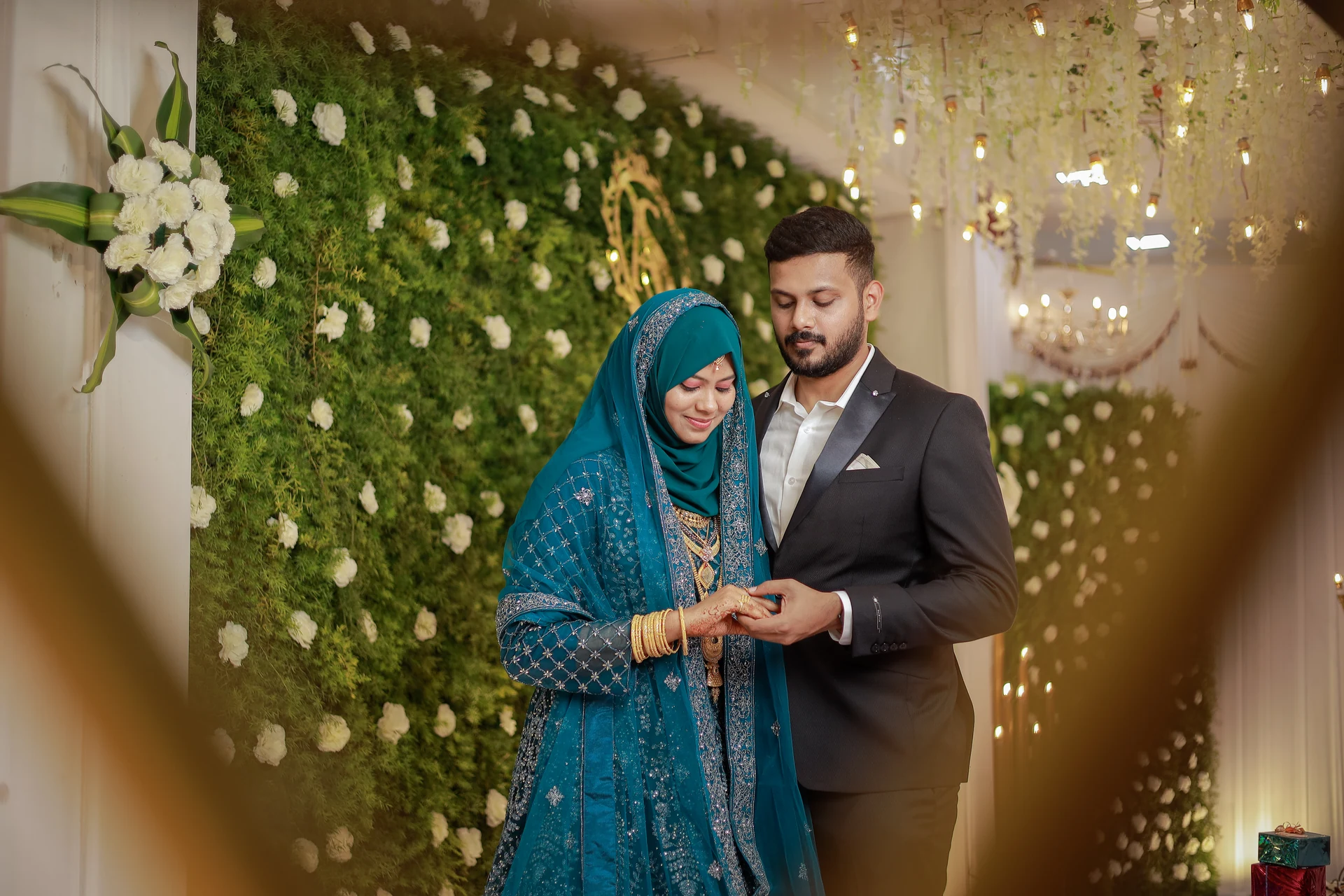
Traditional photography is primarily about making sure the important people and important moments are properly documented.
Think about the photographs your parents will probably look for first.
The ceremony.
The couple on stage.
Parents with the couple.
Immediate family.
Relatives who travelled to attend.
Important rituals.
Guests coming forward to meet the couple.
These photographs may be more directed and straightforward, but that doesn't make them less important.
In fact, years later, some of these photographs can become incredibly valuable.
A traditional photographer's job is often to make sure nobody important disappears from the record of the wedding.
What does a traditional photographer usually focus on?
Depending on the wedding, this may include:
- complete ceremony coverage
- photographs of important rituals
- family groups
- relatives with the couple
- stage photographs
- guest photographs
- portraits requested by families
- documenting the event continuously
Traditional photographers usually work more visibly.
They may ask people to look at the camera, arrange groups, or make sure everyone is clearly seen.
And at large weddings, that role becomes extremely useful.
Then what is candid wedding photography?
Candid photography usually looks beyond the photographs people are deliberately making.
Instead of asking:
Who needs to be photographed next?
the candid photographer is often asking:
What's happening around me right now?
A parent watching the ceremony.
A friend reacting to something outside the frame.
A couple laughing between photographs.
Someone getting nervous before walking into the hall.
Children playing during a serious moment.
The small interactions happening around the main event.
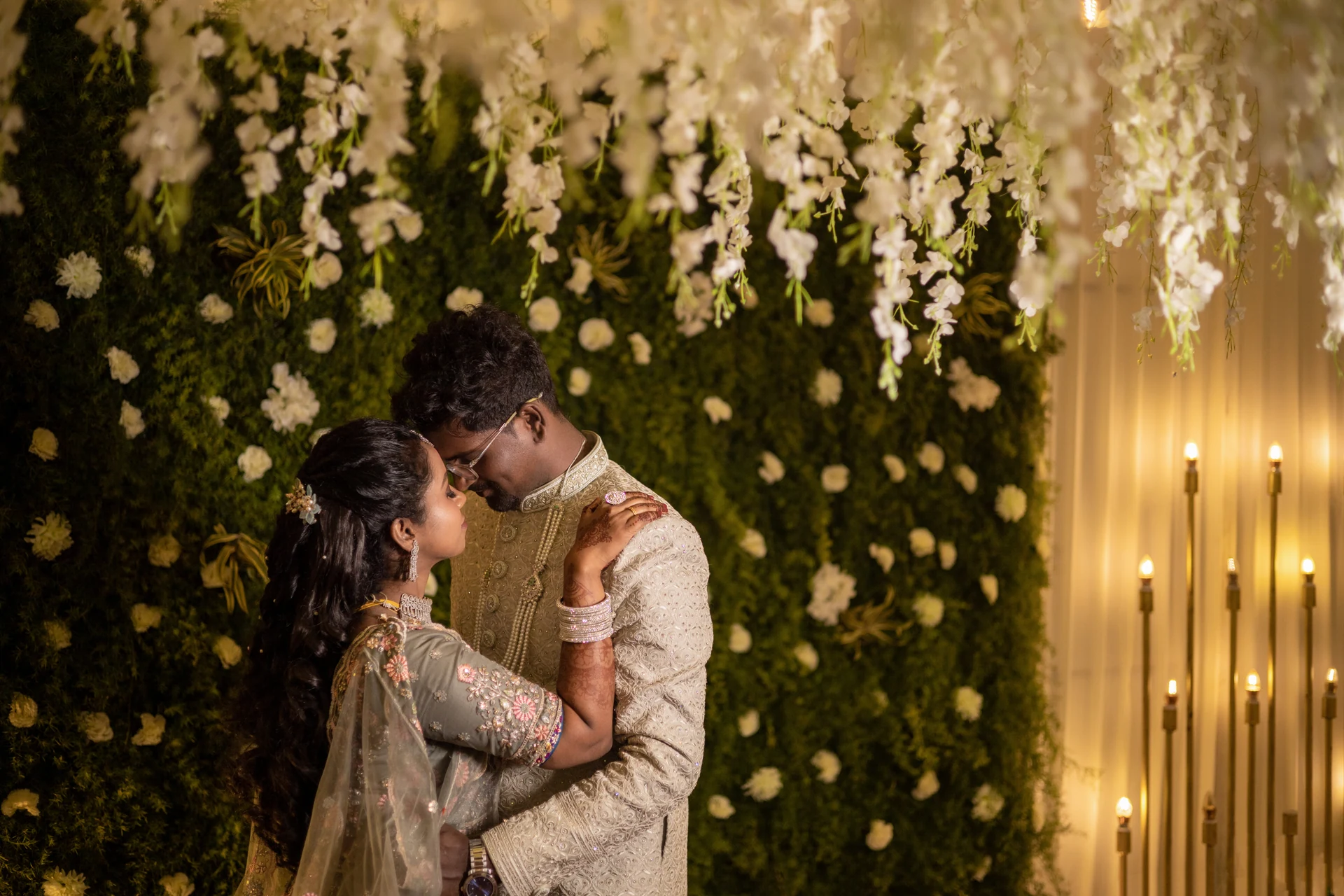
Candid photography is less about documenting attendance and more about documenting experience.
But candid doesn't mean completely invisible
This is one of the biggest misunderstandings around candid wedding photography.
People sometimes assume:
A candid photographer should never pose us.
That isn't necessarily true.
Some photographs are completely observational.
Others need a little help.
We may move you toward better light.
Suggest where you stand.
Ask you to walk together.
Create space around you.
Or guide you into a situation where something natural can happen.
The difference is that the final photograph should still feel like you, rather than like you're performing a complicated pose for the camera.
Good candid photography is often a mixture of observation and gentle direction.
Which one makes the more beautiful photographs?
Neither automatically does.
A candid photographer with poor timing doesn't become better simply because the photograph was unposed.
And a traditional photograph doesn't become boring simply because everyone looked at the camera.
They are solving different problems.
Imagine this moment:
Your parents are standing beside you immediately after the ceremony.
A traditional photographer may make sure you have a clear photograph of the three of you looking at the camera.
At the same time, a candid photographer may notice your mother adjusting something on your clothes while your father is laughing beside you.
Years later, you may value both photographs for completely different reasons.
That's why we don't think one should automatically replace the other.
Why large weddings often need both
At a small celebration with very few people, one experienced photographer may be able to move between documentary coverage, family photographs and portraits.
At a larger wedding, that becomes harder.
Imagine several hundred guests, a ceremony happening on stage, family members waiting for photographs, people moving around the hall and dozens of small interactions happening simultaneously.
One photographer cannot physically be everywhere.
While the traditional photographer is handling family groups on stage, the candid photographer may be photographing something happening elsewhere.
While one person ensures the ceremony is documented safely, another can concentrate on reactions and surrounding moments.
The larger and more complex the wedding becomes, the more useful these clearly defined roles can be.
Traditional photography is not the "cheaper version"
Another misconception is treating traditional photography as the basic option and candid photography as the premium option.
The reality is more nuanced.
Traditional wedding photography requires its own skill set.
Managing groups quickly.
Recognising important family members.
Working through hundreds of guest photographs efficiently.
Maintaining consistency during long ceremonies.
Making sure essential moments aren't missed.
A good traditional photographer is doing a very different job from a good candid photographer.
One isn't necessarily replacing the other.
What about couple portraits?
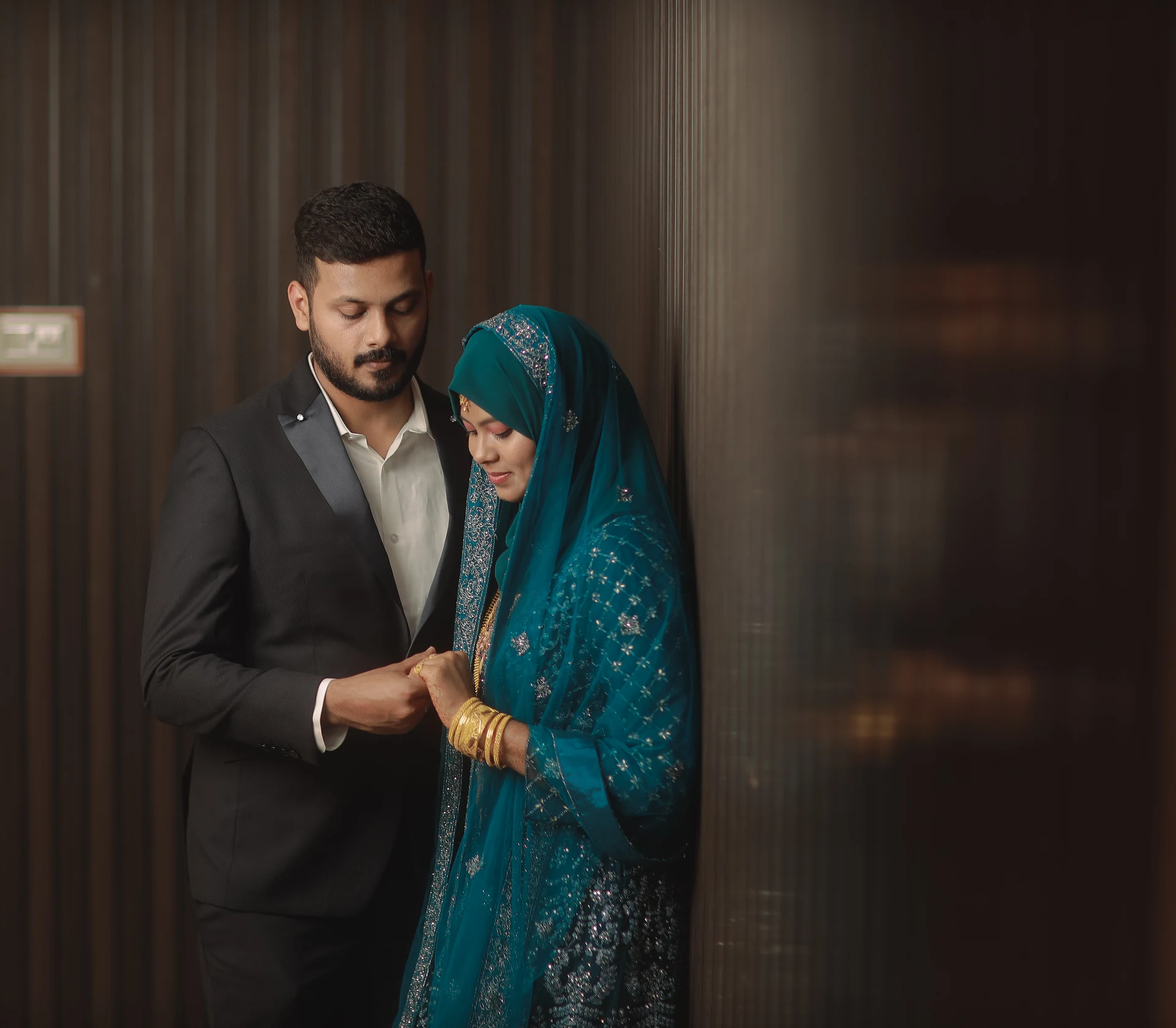
Couple portraits often sit somewhere between candid and traditional photography.
Some will be intentionally composed.
We may choose the background.
Find the light.
Decide where the two of you should stand.
But that doesn't mean every movement or expression needs to be directed.
Once the photograph is set up, we often prefer to give couples some room.
Talk.
Walk.
Look at each other.
Laugh when something inevitably feels awkward.
The structure might be created by the photographer.
The moment inside that structure can still be real.
What should you choose for a small wedding?
For an intimate wedding, you may not need a large team.
If there are fewer guests, a simple ceremony and limited family-group requirements, a strong photographer may be able to cover both documentary moments and formal photographs effectively.
The important thing is not the job title.
Ask your photographer:
Who will handle family photographs?
Who is responsible for complete ceremony coverage?
Who will photograph reactions and moments around the event?
If one person can realistically handle those responsibilities for the size of your wedding, adding photographers unnecessarily doesn't automatically make the coverage better.
What should you choose for a large wedding?
For larger weddings, we generally prefer clearer separation of responsibilities.
A common setup might include:
- one traditional photographer
- one candid photographer
- one traditional videographer
- one candid or cinematic videographer
The exact team depends on:
- guest count
- venue size
- number of simultaneous events
- whether bride and groom preparations happen separately
- how much family photography is expected
- whether the events happen across different locations
Two weddings with the same guest count may still require completely different teams.
What about events happening on both sides?
This becomes especially important for weddings where the bride's and groom's families have separate events or preparations happening simultaneously.
If both sides need coverage at the same time, one photography team cannot simply move between them.
You may need separate photographers or smaller teams assigned to each side.
This is why it helps to discuss the actual structure of your wedding before comparing package prices.
A package with fewer photographers isn't necessarily worse.
A package with more photographers isn't automatically better.
The question is whether the team structure matches what's actually happening.
Don't build your team around labels alone
When comparing photographers, don't only ask:
How many candid photographers are included?
Instead, ask:
- Who covers the ceremony continuously?
- Who handles family and stage photographs?
- Who photographs the surrounding moments?
- What happens if events occur simultaneously?
- How many photographers will actually be present?
- Who is responsible for which part of the wedding?
- How will all of the photographs eventually feel like one story?
Those answers tell you much more than the words candid and traditional on a quotation.
How we look at it at Crescent Stories
For us, the goal isn't to produce two separate collections one called traditional and another called candid.
The goal is to create one complete memory of the wedding.
Some photographs need to clearly show who was there.
Some need to preserve the ceremony properly.
Some need to show the people watching from the side.
Some photographs will be deliberately created.
Others will happen in half a second.
All of them can belong to the same story.
The camera or photographer responsible for making the photograph matters much less than what that photograph eventually means to you.
So, do you actually need both?
For many medium and large weddings:
Yes, probably.
Not because candid photography is better.
And not because traditional photography is compulsory.
But because weddings often contain too many things happening simultaneously for one person to document everything well.
For smaller celebrations, a more compact team may make much more sense.
The right answer depends on your wedding.
Not the package name.
The photographs you need and the ones you didn't know you needed
Years later, you'll probably want the clear photograph with your parents.
You'll want the photograph of everyone gathered together.
You'll want to see the ceremony properly.
But you may also find yourself returning to the photograph of your father watching from the corner of the room.
Your friends laughing behind you.
Someone holding your hand before everything begins.
One kind of photography makes sure the important things are documented.
The other helps you remember what those things felt like.
A good wedding story usually needs a little of both.
Planning your wedding?
If you're unsure how many photographers or filmmakers your events actually need, tell us how your celebration is planned.
We'll help you understand what kind of coverage makes sense for it.