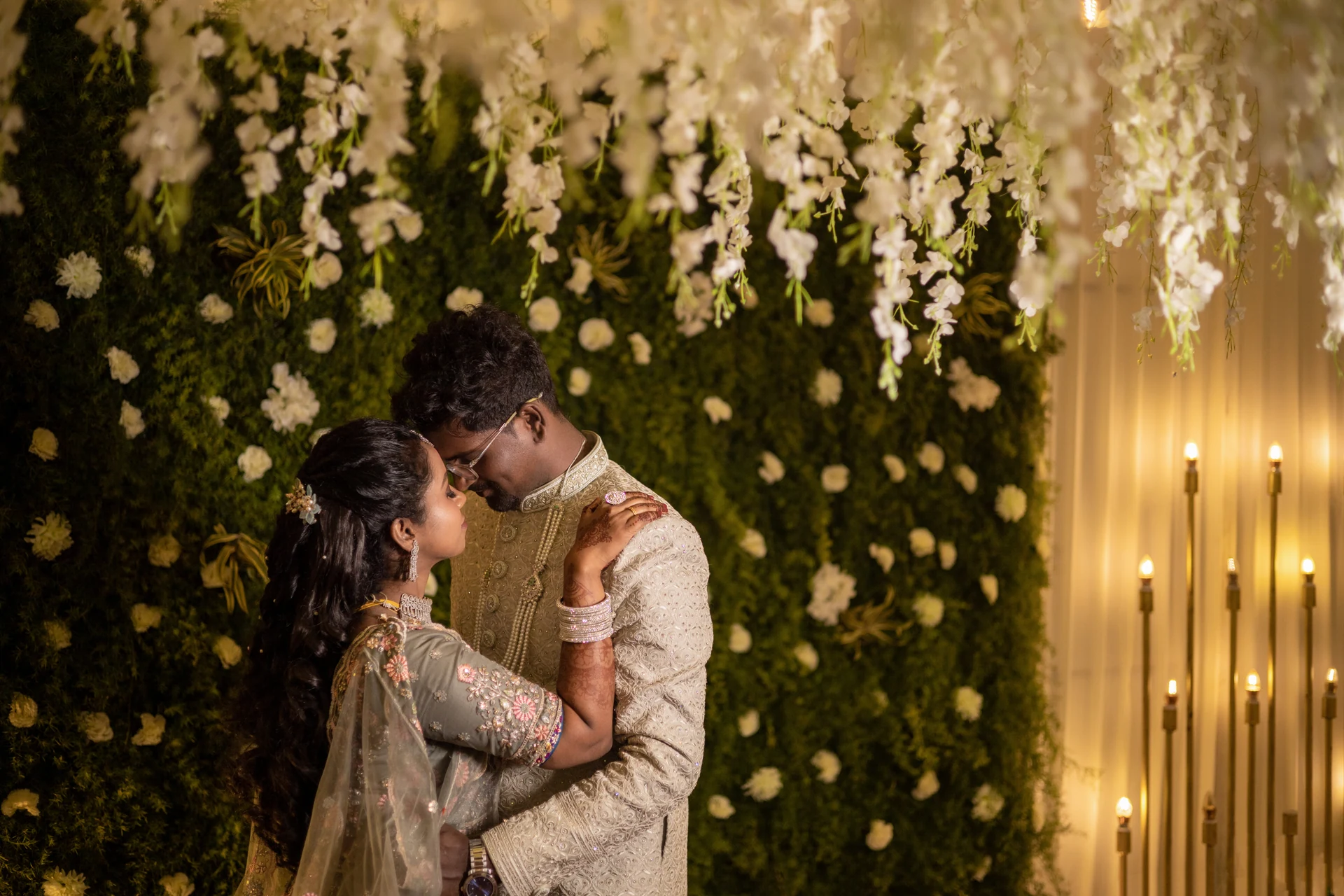

How Much Time Should You Actually Keep for Wedding Photographs?
A practical guide to giving photography enough time on your wedding day without turning the celebration into one long photoshoot.
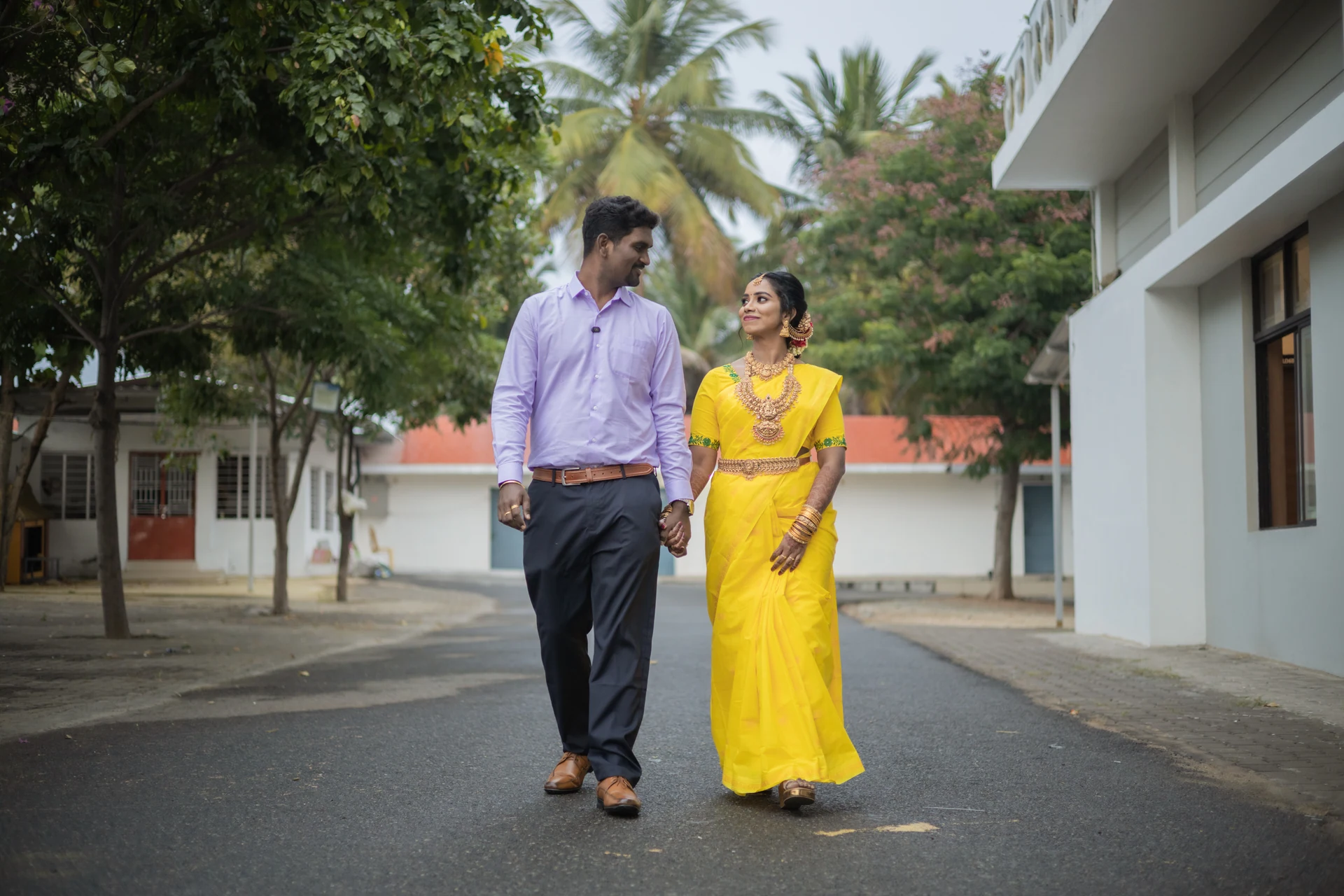
One of the easiest things to underestimate while planning a wedding is time.
On paper, the schedule might look comfortable. The ceremony ends, lunch begins an hour later, and somewhere in between there seems to be plenty of time for photographs.
Then the wedding day actually arrives.
Someone needs to be found. Jewellery needs fixing. A relative wants one more family photograph. The couple hasn't eaten yet. Guests are waiting to meet them. The light changes. And suddenly that comfortable one-hour window becomes fifteen minutes.
This happens more often than people realise.
The answer isn't to plan your entire wedding around photography.
In fact, we think it should be the opposite.
Your wedding should still feel like a wedding.
But giving photography a little intentional space can make an enormous difference — both to the photographs you receive and to how relaxed you feel while making them.
Start before the ceremony
Some of the photographs we value most happen before the main event begins.
There is a different atmosphere during those minutes.
People are getting ready. Family members are moving between rooms. Someone is looking for something that was definitely kept somewhere safe. Friends are arriving. Parents are watching everything slowly come together.
These aren't simply preparation photographs.
They help tell us where we are, who is there, and what the day felt like before everyone gathered around the main ceremony.
Where the schedule allows, keeping roughly 30 to 60 minutes before the main ceremony gives your photographers time to observe these moments without rushing.
That doesn't mean the couple has to stand ready for photographs for an entire hour.
Most of the time, we're simply present while the wedding begins around us.
Couple portraits don't need to take over your wedding
You don't need to disappear from your own celebration for two hours just to make beautiful portraits.
For many weddings, 20 to 30 uninterrupted minutes can already give us enough space to create a meaningful set of couple photographs when the location, light and schedule cooperate.
If there is room for 30 to 45 minutes, even better.
The important word is uninterrupted.
Thirty calm minutes with the couple is very different from thirty minutes where relatives are continuously calling them back, guests are waiting for photographs, another event is starting, and everyone is checking the time.
We would rather have a relaxed twenty minutes than a stressful forty-five.
And portraits don't have to mean endless posing.
Sometimes we'll guide you into better light.
Sometimes we'll help with where to stand or how to move.
Sometimes we'll deliberately create a photograph.
But once everything feels right, we also want to give the two of you enough room to simply be there together.
Give family photographs their own space
Family photographs may not always be the images couples are most excited about while planning a wedding.
Years later, they can become some of the photographs that matter most.
They also almost always take longer than expected.
Someone has stepped outside.
Someone else is eating.
A cousin has disappeared.
A grandparent needs somewhere comfortable to sit.
Another group sees photographs happening and joins in.
If family photographs are important to you, keeping around 20 to 30 minutes specifically for them can make the process far calmer.
It also helps to know your essential groups beforehand.
You don't need a spreadsheet containing every possible combination of relatives.
Start with the people that matter most:
- parents
- siblings
- grandparents
- immediate families
- closest friends
Additional photographs can always happen when the day allows.
Don't schedule every minute
A wedding shouldn't become a sequence of:
ceremony → couple portraits → family portraits → next event.
Some of the moments that make the day personal happen outside all of that.
Your parents watching from somewhere behind the crowd.
Friends making fun of you five minutes before the ceremony.
Children running through the hall.
People meeting after years apart.
Someone getting emotional and immediately pretending they aren't.
Those moments need something slightly different from scheduled photography.
They need time for nothing to be scheduled.
Small gaps in the timeline allow everyone to breathe.
And they give us room to notice.
Keep a buffer between important parts of the day
If one part of the wedding ends at 4:00 PM and the next is planned to begin at exactly 4:00 PM, there isn't really a transition.
Real weddings rarely move that precisely.
Even 15 to 20 minutes of breathing room between important parts of the day can help enormously.
It gives you time to move between spaces.
Drink some water.
Fix your clothes.
Talk to someone.
Eat something.
Or simply sit down for a few minutes.
It also means that when one part of the day runs slightly late, everything after it doesn't immediately begin under pressure.
Good wedding photographs don't always need more time.
Sometimes they simply need less rushing.
Light can matter more than an extra half hour
Ten minutes at the right time can sometimes be more useful than thirty minutes at the wrong one.
This matters particularly for outdoor portraits.
Midday sunlight can be harsh. Evening light changes quickly. Indoor venues can look completely different once stage or decorative lighting takes over.
You shouldn't have to build your wedding around technical photography decisions.
That's part of what your photographer should help with.
But if photographs are important to you, it is useful to involve your photography team in the timeline before everything becomes fixed.
A small adjustment to when portraits happen can sometimes make a much bigger difference than adding another hour of coverage.
Multi-event weddings need different rhythms
If your celebrations happen across several events or several days, every event does not need exactly the same photographic approach.
One may be mostly about family and ceremony.
Another may give us more time with the couple.
Another may be louder, faster and filled with people interacting.
Trying to force the same photography plan onto every event usually isn't necessary.
Instead, it helps to look at the celebration as one larger story.
Where will we have quieter time with the couple?
When will the families be together?
Which event will probably carry the most energy?
Where might we have time for portraits?
Which parts of the celebration are likely to move quickly?
Thinking this way creates a much more complete collection of photographs than trying to fit everything into one small portrait window.
So, how much time should you keep?
There is no single timeline that works for every wedding.
But as a practical starting point, you can think about:
- 30–60 minutes before the ceremony for preparations, people and atmosphere
- 20–45 minutes of uninterrupted couple time, depending on the wedding, location and light
- 20–30 minutes for important family photographs
- 15–20 minutes of breathing room around major transitions whenever possible
These don't have to happen one after another.
In fact, they usually shouldn't.
The strongest wedding coverage often comes from a combination of intentional time and completely unplanned moments.
The most important thing
Don't spend your wedding wondering whether enough photographs are being taken.
Choose people you trust.
Give them enough room to work.
And then go back to your wedding.
Be with your family.
Talk to your friends.
Eat.
Laugh.
Get delayed.
Forget the timeline for a while.
The photographs you planned for will matter.
But sometimes, the photographs you never planned at all are the ones that make the story feel unmistakably yours.
Planning your wedding?
If you're working out your timeline and wondering how photography and films should fit into it, tell us what you're planning.